DeepSeek's $1.6B Development: Debunking the Affordability Myth
- By Zoey
- Mar 13,2025
DeepSeek's new chatbot boasts a surprising capability: answering virtually any question. This AI, a product of the Chinese startup, has rapidly become a major market player, even causing significant drops in NVIDIA's stock price.
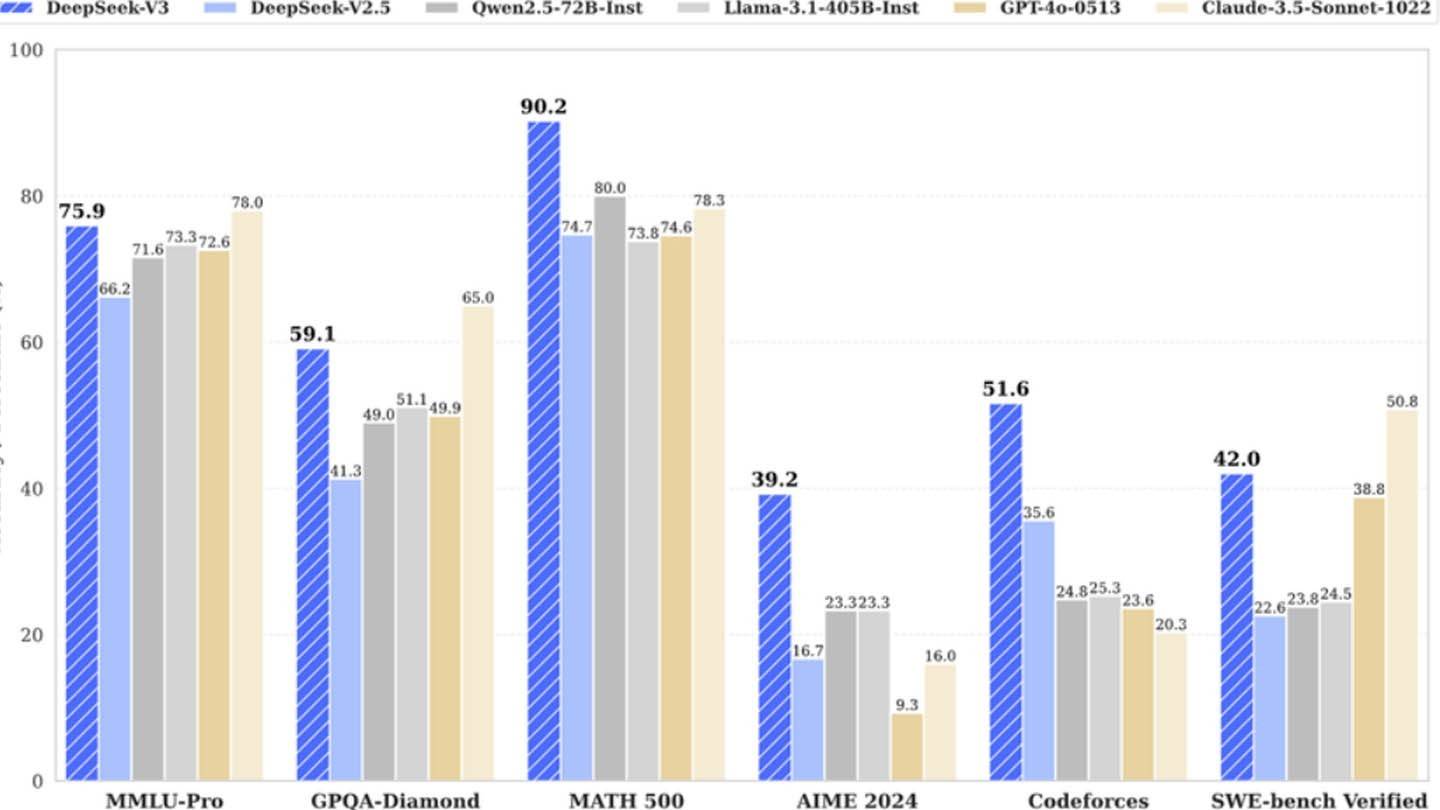 Image: ensigame.com
DeepSeek's success stems from its innovative architecture and training methods. Key technologies include:
- Multi-token Prediction (MTP): Instead of predicting words individually, MTP forecasts multiple words simultaneously, boosting accuracy and efficiency.
- Mixture of Experts (MoE): This architecture uses multiple neural networks, accelerating training and improving performance. DeepSeek V3 utilizes 256 networks, activating eight for each token.
- Multi-head Latent Attention (MLA): MLA focuses on crucial sentence parts, repeatedly extracting key details to minimize information loss and capture nuanced meaning.
DeepSeek initially claimed a remarkably low training cost of $6 million for its powerful DeepSeek V3 model using only 2048 GPUs.
 Image: ensigame.com
However, SemiAnalysis revealed DeepSeek's use of approximately 50,000 Nvidia Hopper GPUs—including 10,000 H800, 10,000 H100, and additional H20 units—across multiple data centers. This represents a total server investment of roughly $1.6 billion and operational expenses nearing $944 million.
DeepSeek, a subsidiary of High-Flyer hedge fund, owns its data centers, providing control over optimization and faster innovation. Its self-funded status enhances flexibility. Furthermore, DeepSeek attracts top talent, with some researchers earning over $1.3 million annually, primarily from Chinese universities.
 Image: ensigame.com
DeepSeek's initial $6 million training cost claim is misleading; it only covers pre-training GPU usage, excluding research, refinement, data processing, and infrastructure. The company's total AI development investment exceeds $500 million. Its lean structure, however, allows for efficient innovation compared to larger, more bureaucratic companies.
 Image: ensigame.com
DeepSeek's success highlights the potential of well-funded independent AI companies to compete with industry giants. While its "revolutionary budget" claims are exaggerated, its success is undeniable, resulting from substantial investment, technological breakthroughs, and a strong team. The cost difference is stark: DeepSeek's R1 model cost $5 million to train, compared to ChatGPT4's $100 million. However, it's still cheaper than its competitors.
Latest News
more >-
-

- Universal Piece Trello and Wiki Links
- Oct 22,2026
-

-

-