Switch 2 Price Won't Hinder Success
- By Christian
- Nov 30,2025
When Nintendo debuted its eagerly awaited Switch 2 Direct presentation in early April, fans were thrilled by exciting new features and game reveals—until realizing one critical detail was missing: the price tag. Concerns quickly turned to reality when Nintendo confirmed the console would launch at $449, marking a $150 increase from the original Switch's $299 price point. The frustration over Nintendo's lack of transparency was compounded by worries that the higher cost—paired with the $80 launch title Mario Kart World—could hinder the system's success.
Some disillusioned fans, still haunted by the Wii U era, feared history might repeat itself, predicting the Switch 2's steep price would shrink its audience and plunge Nintendo into decline. Why pay $450—the same as Sony and Microsoft's current-gen consoles—for hardware based on older technology? Yet these concerns were swiftly disproven when Bloomberg reported the Switch 2 is tracking toward record-breaking sales, projected to move 6-8 million units—far surpassing the PS4 and PS5's shared launch record of 4.5 million. Clearly, demand remains sky-high.
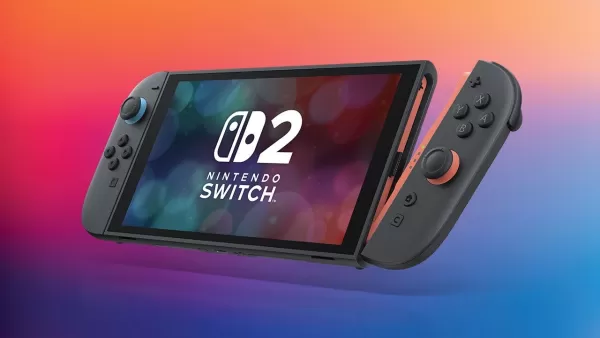
Ironically, Nintendo's past failures reveal why the Switch 2 will succeed. Take the Virtual Boy—Nintendo's only VR experiment—which suffered from unrefined technology, discomfort-inducing gameplay, and a jarring red display that fell far short of expectations. Unlike that doomed concept, the Switch 2 follows Nintendo's triumphs like the Wii, which revolutionized gaming with accessible motion controls that appealed to casual and hardcore players alike.
Sony's PlayStation 2 proved DVD capability could make a console irresistible, but Nintendo shines brightest when perfecting its innovations. The original Switch transformed gaming by seamlessly merging handheld and home console play—a concept that remains beloved today. While Joy-Con drift and underwhelming hardware limited its predecessor, the Switch 2 delivers meaningful upgrades without abandoning Nintendo's winning formula.
However, desirable hardware alone isn't enough—software drives success. The Wii U stumbled not just due to its confusing tablet controller, but because its launch lineup lacked killer apps. New Super Mario Bros. U felt stale after multiple DS-era retreads, while ports like Donkey Kong Country: Tropical Freeze only found acclaim years later. In stark contrast, the Switch 2 boasts Nintendo's strongest catalog yet while pioneering fresh experiences—like Mario Kart World's open-world reinvention and the first 3D Donkey Kong adventure in decades.
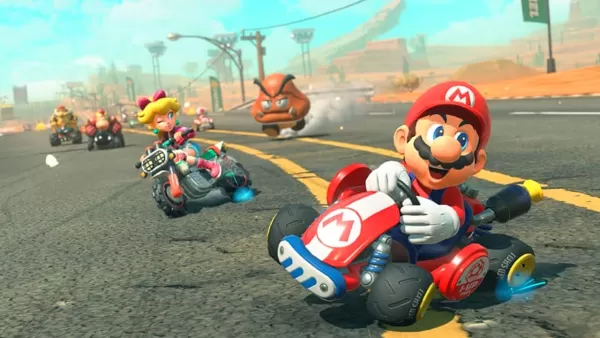
Cost remains a consideration—particularly amid economic uncertainty—yet Nintendo's pricing aligns with competitors. The $499 Switch 2/Mario Kart World bundle matches the standard PS5's MSRP, while Xbox Series X hovers near the same range. Unlike Sony's disastrous $599 PS3 launch (nearly $1,000 today), modern console pricing accepts higher baseline costs.
Ultimately, Nintendo occupies a unique space—its software justifies premium pricing, yet the Switch 2 costs no more than rival systems. While its hardware can't match PS5 power, its must-play exclusives and portable flexibility deliver unmatched value. With PlayStation 5 sales surpassing 75 million units at similar prices, consumers have clearly accepted this pricing tier—and Nintendo's irresistible games will ensure the Switch 2 follows suit.
Latest News
more >-
-

- Universal Piece Trello and Wiki Links
- Oct 22,2026
-

-

-