Top Gaming Accessory Brands Facing Tariff Impacts in 2025
- By Adam
- Jun 22,2025
The impact of the Trump administration’s tariffs on U.S. consumers is only beginning to surface, and experts warn that the full consequences may still lie ahead. When the initial tariffs were announced in March, industry analysts immediately raised concerns about rising prices and supply chain disruptions—issues expected to ripple across a wide range of products, including video game consoles, physical games, and gaming accessories.
In April, the White House rolled out a 10% universal tariff on imports from all countries, followed by a series of “reciprocal tariffs” targeting more than 50 nations. At one point, the tariff rate on Chinese imports spiked to an astonishing 145%, before being paused and later reduced to 30% in May.
While the current tariff landscape remains fluid and complex, one thing has become increasingly clear: it's already reshaping the gaming industry. Major players like Sony, Microsoft, and Nintendo are actively evaluating pricing strategies, rethinking global supply chains, and preparing for what could be a volatile year ahead.
Major Gaming Brands
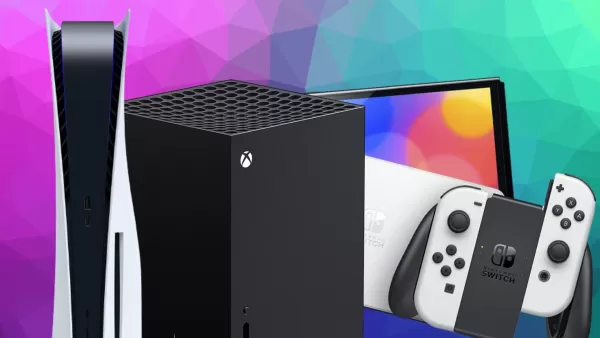
Sony, Microsoft, and Nintendo appear to be among the best-positioned companies to navigate the ongoing tariff challenges, thanks to strong financial resources and adaptable manufacturing networks. However, if tariffs remain in place long-term, consumer price increases will likely become unavoidable.
Sony
Sony has remained relatively quiet regarding its response to the latest U.S. tariffs. Despite a notable drop in stock value following President Trump’s reciprocal tariff announcement on April 5, PlayStation’s parent company has not yet announced any price increases for U.S. products.
However, there are signs that changes may be coming. In April, Sony increased the prices of PS5 consoles in Europe, the UK, Australia, and New Zealand, citing economic pressures such as inflation and fluctuating exchange rates. Sony CFO Lin Tao recently stated that the company is closely monitoring market conditions and may eventually pass additional costs onto consumers through higher prices or adjusted shipment allocations.
Tao also estimated that tariffs could negatively affect Sony's business by up to $685 million. While most PlayStation consoles and accessories are still manufactured in China, Sony is exploring ways to diversify its production network, including potential U.S.-based manufacturing. Additionally, the company has reportedly stockpiled a three-month supply of PS5 units in the U.S. to help cushion against short-term tariff impacts.
With next-gen consoles like the Nintendo Switch 2 and Xbox Series models pushing average console prices upward, the PS5 Pro currently offers a compelling value. However, if tariffs on Chinese imports remain unchanged, Sony may raise prices across its lineup—including consoles, games, and accessories—to offset rising costs.
Meanwhile, Sony continues its annual PlayStation Days of Play sale, offering temporary discounts on hardware, controllers, and digital titles.
Microsoft
Microsoft was quick to respond to the new tariff environment. On May 1, the company increased prices across its entire Xbox hardware lineup, with the Xbox Series X now priced at $600. Since the majority of Xbox consoles and accessories are manufactured in China, the rise in import costs has prompted Microsoft to adjust pricing accordingly to protect profit margins.
Despite this, Microsoft appears to be better prepared than many competitors. The company already operates a final assembly facility in Guadalajara, Mexico, for many of its U.S.-bound Xbox products. Some users have even reported receiving Xbox Series S units produced in Vietnam as early as 2023, suggesting Microsoft has been gradually shifting production away from China for several years.
Additionally, Microsoft confirmed that first-party Xbox game prices will increase to $79.99 during the upcoming holiday season. While PlayStation and Nintendo titles remain unaffected for now, analysts expect both platforms to follow suit.
Accessories such as controllers and headsets, which are still largely made in China, are also impacted by the tariffs. As long as these trade policies remain in effect, higher accessory prices are likely here to stay. Microsoft’s broader hardware portfolio, including Surface devices, faces similar challenges. Although some production moved to Thailand and Vietnam as early as 2020, China remains a critical hub for many of its components.
Nintendo
Nintendo found itself in a difficult position after announcing the Nintendo Switch 2 just days before the reciprocal tariffs took effect. Fans reacted strongly to the $449 base model price tag, prompting Nintendo to delay U.S. preorders while assessing the tariff impact and market conditions.
Ultimately, Nintendo decided to keep the console price steady at $449 for the base model and $499 for the Mario Kart World bundle. Instead of increasing console prices, the company opted to raise the cost of accessories by $5 to $10 across the board.
Although Nintendo began shifting some production from China to Vietnam back in 2019, most of its hardware and accessories are still made in China. Earlier this year, over one million Nintendo Switch 2 units arrived in the U.S. as part of a strategic inventory buildup ahead of the June 5 release date.
Approximately one-third of Switch 2 units are now assembled in Vietnam, but the majority of Nintendo’s supply chain remains concentrated in China. With accessory prices already on the rise and select first-party titles hitting $80, further price adjustments could occur if tariffs continue into the future.
Nintendo President Shuntaro Furukawa recently expressed concern about the potential effects of tariffs on consumer spending. He noted that if everyday expenses like food continue to rise, consumers may have less disposable income available for gaming hardware. Despite this uncertainty, Nintendo forecasts selling 15 million Switch 2 units in its first year.
Razer
As one of the leading names in gaming peripherals, Razer operates dual headquarters in Singapore and Irvine, California. Known for its signature RGB lighting and high-quality gear, Razer produces a wide variety of products, including mice, keyboards, headsets, microphones, gaming chairs, and laptops like the Razer Blade series.
Unfortunately, most of Razer’s products are manufactured in China, with only a small portion built in Taiwan. This makes the company particularly vulnerable to international trade tariffs. Shortly after the reciprocal tariffs went into effect in April—and with the rate on Chinese goods temporarily spiking to 145%—Razer announced it would temporarily halt sales of certain products in the U.S., including the Razer Blade 16 laptop.
Given
Latest News
more >-
-
-

- Universal Piece Trello and Wiki Links
- Oct 22,2026
-

-