"God of War's Success Hinges on Reinvention"
- By Sebastian
- May 17,2025
The God of War series has been a cornerstone of PlayStation gaming across four console generations. Launched in 2005, Kratos' journey from vengeful warrior to the new god of war has captivated players, and its evolution over two decades showcases the franchise's ability to adapt and thrive. While many long-standing series struggle to remain relevant, God of War's success lies in its willingness to evolve. The 2018 reboot, which shifted Kratos from the world of Ancient Greece to Norse mythology, marked a pivotal change in both the series' presentation and gameplay. Yet, even before this acclaimed reboot, Sony Santa Monica introduced smaller yet significant changes that helped sustain the series' vitality.
For God of War to continue its success, reinvention remains essential. Director Cory Barlog has expressed interest in exploring settings like Egypt and the Mayan era, sparking rumors of an Egyptian-themed future installment. While these may be speculative, the allure of Ancient Egypt's rich mythology and culture is undeniable. However, a new setting alone won't suffice; the series must continue to reinvent itself, much as it did when transitioning from the Greek trilogy to the Norse saga, by enhancing successful elements while introducing fresh innovations.
 God of War's combat evolved significantly for the Norse games, yet it retained the intense spirit of the original Greek trilogy. | Image credit: Sony
The series has consistently embraced change from one game to the next. The original Greek trilogy, spanning a decade, refined its hack-and-slash mechanics, culminating in the polished gameplay of God of War 3. This final entry, designed for the PlayStation 3, utilized enhanced hardware to offer new camera angles and showcase impressive graphics. Kratos' arsenal expanded with a revamped magic system that complemented the melee combat's rhythmic combos, and he faced a diverse array of challenging enemies.
The 2018 reboot shifted away from some of the original trilogy's defining features. The Greek games included substantial platforming and puzzle elements, which were largely removed in the Norse games due to a new over-the-shoulder camera perspective. Puzzles remained but were adapted to fit the new adventure-focused design.
The roguelike DLC, Valhalla, for God of War Ragnarök, marked a return to the series' roots. It reintroduced battle arenas, a beloved feature from God of War 2 onwards, adapted for the Norse setting. This mechanical return was mirrored in the story, where Kratos confronted his past in Valhalla, invited by Týr, the Norse god of war. This narrative and mechanical nod to the Greek era completed Kratos' journey, bringing it full circle.
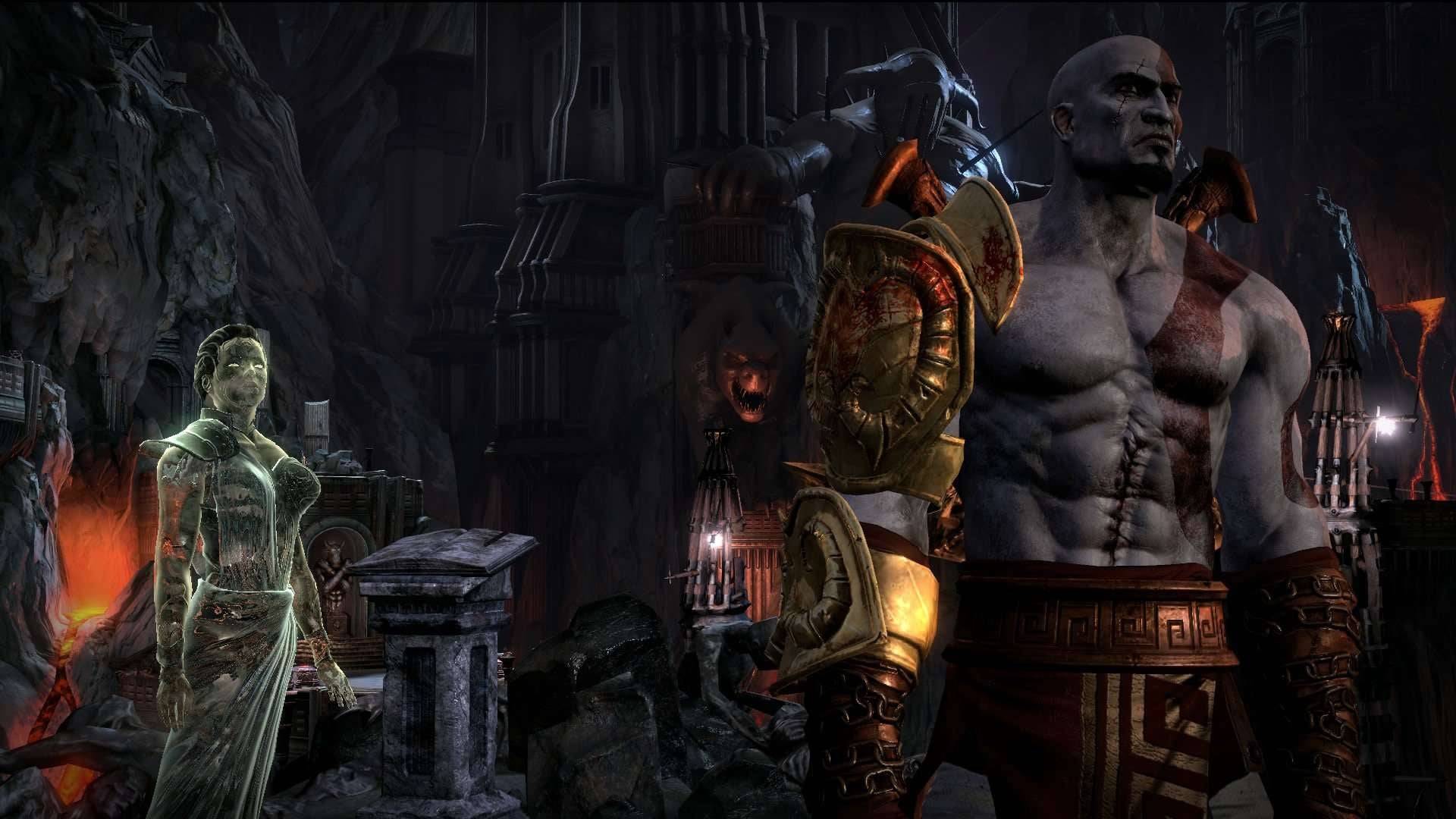 While the original trilogy had solid storytelling, the Norse duology elevated God of War's narrative to new heights. | Image credit: Sony
The Norse games introduced numerous innovations, including the Leviathan Axe's unique throwing mechanics, a combat-defining parry system enabled by various shield types, and in Ragnarök, a magical spear offering a fast, explosive attack style. These features enriched the exploration of the Nine Realms, each with distinct enemies, visuals, and characteristics.
The most striking evolution is in the storytelling. The Norse duology delves into Kratos' emotional journey, fueled by the loss of his wife and his complex relationship with his son, Atreus. This shift from the more straightforward, brutish narrative of the Greek trilogy to a more emotionally resonant story is a key factor in the Norse era's critical and commercial success.
God of War's shift in both mechanics and narrative reflects a unique approach to franchise development. The creators view the Norse games not as traditional sequels but as extensions of Kratos' journey. This mindset should guide future installments.
The contrasting experiences of the Assassin's Creed series highlight the risks of straying too far from a franchise's core. Despite frequent changes in setting and style, Assassin's Creed has faced challenges in maintaining fan loyalty. The shift to an open-world RPG with Origins and subsequent games has diluted the series' connection to its assassin roots, leading to criticism over content bloat and a drift towards power fantasies that some feel should have been standalone RPGs.
Recent efforts like Assassin's Creed Mirage, a soft reboot that returns to the series' Middle Eastern origins, and the upcoming Assassin's Creed Shadows, focusing on stealth with the character Naoe, aim to reconnect with the series' foundational gameplay and narrative.
God of War has navigated its evolution more successfully by never losing sight of what made Kratos compelling and the series' mechanical essence. It built upon the core of the Greek trilogy—the intense, relentless combat—while introducing new elements like enhanced Spartan Rage options, innovative weapons, and varied combat options. These additions enhance rather than detract from the series' identity and deepen its lore.
Looking forward, whether the rumors of an Egyptian setting materialize, the next God of War must continue to evolve while preserving the elements that have made it successful. The 2018 reboot focused on maintaining the high standards of combat set by the Greek trilogy. However, future games will likely be judged more on their storytelling, the true strength of the Norse duology. Kratos' transformation from a rage-driven warrior to a complex father and leader underscores the importance of narrative in the series' recent success. The next installment must build on this strength while introducing bold new changes, aiming to be remembered as the pinnacle of the next era of God of War.
Latest News
more >-
-

- Universal Piece Trello and Wiki Links
- Oct 22,2026
-
-

-