Cyberpunk Classic '400 Boys' Reimagined in Netflix's Love, Death & Robots Season 4
- By Anthony
- Dec 14,2025
Marc Laidlaw penned 400 Boys in 1981 at age 21, well before he became Valve’s lead writer and a key architect of the Half-Life series. The short story appeared in Omni magazine in 1983 and later gained a wider following through Mirrorshades: The Cyberpunk Anthology. On his website, Laidlaw notes that 400 Boys has likely reached more readers than anything else he’s written, save perhaps Dota 2 seasonal ad copy. While the gaming world celebrates him for Half-Life, Laidlaw’s creative legacy extends far beyond video games. It’s a curious twist of fate.
In a ravaged city where rival gangs uphold a samurai-like code, a new group, the 400 Boys, compels them to band together. Directed by Canadian filmmaker Robert Valley, whose episode “Ice” earned an Emmy for Outstanding Short Form Animation, this adaptation blends stunning visuals with raw intensity.
“The idea sparked from wandering around,” Laidlaw recalls. “Living in Eugene, Oregon, I saw phone poles plastered with names of local bands, each cooler than the last. I wanted to capture that vibe. So, I thought, if I create a story with gangs, I can invent all these wild gang names. That was the fun part—it shaped much of the story.”
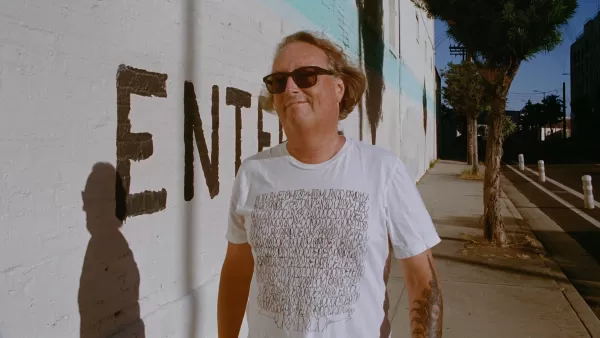
Now, more than four decades after its debut, 400 Boys is a standout episode in the fourth season of Netflix’s acclaimed animated anthology Love, Death and Robots. Directed by Robert Valley, known for Zima Blue (Season 1) and Ice (Season 2), the episode was scripted by Tim Miller and features John Boyega, famed for his role as Finn in Star Wars. Suddenly, 400 Boys is in the spotlight, a milestone Laidlaw never anticipated.
“The story faded into obscurity, but cyberpunk endured,” Laidlaw shares via video call, days before the Season 4 premiere on Netflix.
Forty years is a long wait for an adaptation, isn’t it? About 15 years ago, Tim Miller from Blur, a studio renowned for video game cinematics, reached out about adapting 400 Boys. The project stalled amid studio shifts, as many do.
Then, in March 2019, Love, Death and Robots burst onto Netflix. This bold, adult-oriented anthology captivated audiences with its daring, eclectic episodes. Laidlaw noticed Tim Miller’s involvement. “I was impressed by Tim’s vision, especially for adapting J. G. Ballard’s The Drowned Giant into an animated episode,” he says. “It showed his knack for bold choices.”
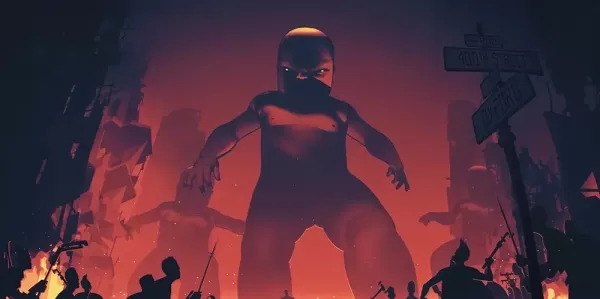
In 2020, Laidlaw relocated to Los Angeles. As the pandemic subsided, he crossed paths with Miller at local events. He didn’t push 400 Boys but hoped the anthology’s success might revive interest. A year ago, he received an email asking if he’d be open to optioning the story. The moment had arrived.
Laidlaw discussed the story with Miller, who adapted the script, ensuring fidelity to the original while adding visual flair. He also spoke with director Robert Valley, sharing an audiobook of 400 Boys he’d narrated during the pandemic for online audiences.
Laidlaw took a hands-off approach. “It was refreshing to step back and not be in the thick of it,” he says. “I wanted to see what they’d create and enjoy the result.”
He’s seen the episode and is thrilled. “John Boyega, the characters, the accents, the world—it’s so vibrant. They made it visually spectacular, even more engaging than the story.”
Laidlaw calls 400 Boys a piece from “a younger version of myself, a lifetime ago.” Written in his early twenties, he remains proud of it. “I’m still pleased with it, considering how young I was.”
After a quiet period, Laidlaw joined Valve in 1997, shaping Half-Life. “And then everything changed,” he reflects.
Laidlaw left Valve in 2016, a move that seemed like a full retreat from creative work. In reality, he’s in a position to pursue projects on his terms. “I retired too intensely,” he admits. He never meant to stop creating. He tried returning to writing, but the publishing world had transformed during his gaming years. Solo game development wasn’t feasible either. “I can’t make a game alone—it takes a team.”
Now, Laidlaw focuses on music. His audience grew after Valve’s Half-Life 2 anniversary documentary last year, boosted by a rare development video he shared on YouTube. “I’m in the wrong business!” he laughs. “Maybe I should just leak old Valve secrets.”
Reflecting on the Valve documentary, Laidlaw says, “It helped me process that chapter, reconnect with old friends, and put it behind me. It was therapeutic.”
With Half-Life and Half-Life 2 documentaries complete, only Dota 2, now 12 years old, remains for potential retrospectives. Maybe in eight years, Valve will call about that—or even Alien Swarm, where he contributed minimally.
Talking to Laidlaw inevitably circles back to Half-Life. With the Valve documentaries out, there’s little left to say about the past. But what about Half-Life’s future?
Asking Laidlaw about Half-Life 3 is futile. He’s disconnected from Valve’s current team and wouldn’t spill secrets if he had them. Instead, I ask if he’d write for a game again. He’s open to it, even suggesting Hideo Kojima could use his skills. “When I saw Death Stranding, I thought, ‘Does he know I’m available?’ I could polish dialogue without disrupting the vision.”
Post-Valve, Laidlaw expected more compelling offers. Instead, he got odd requests, like writing for a mobile laser tag game. “They didn’t understand my work,” he says. “I don’t like saying no, but those weren’t right for me.”
The inevitable question: Would he return if Valve called for Half-Life 3? “I wouldn’t,” he states firmly. “I started feeling like the old guy stifling ideas. You need fresh voices, fans who’ve grown into creators. I’d be holding back progress, saying, ‘That’s not how G-Man would act.’ I had to step back.”
He hasn’t played Half-Life: Alyx and feels out of touch with modern game development. “I’m not on the cutting edge anymore. That’s not where my passion lies. The Half-Life chapter is closed for me.”
Yet, Laidlaw’s past continues to resonate. Netflix’s adaptation of 400 Boys, 40 years later, proves it. Perhaps one day, Netflix will approach Valve about Half-Life. Laidlaw might find himself revisiting that legacy again.
“I stumbled into cyberpunk before it had a name and joined a small game company that created Half-Life,” he says. “I’ve been fortunate to be part of these cultural moments.”
Latest News
more >-
-

- Universal Piece Trello and Wiki Links
- Oct 22,2026
-
-

-