Outer Worlds 2: New RPG Freedom Revealed - IGN First
- By Logan
- Dec 28,2025
[Note: All footage is from a work-in-progress alpha build.]
After seeing The Outer Worlds 2 firsthand, it’s clear that developer Obsidian prioritized deepening the RPG mechanics. While the first game was more accessible with streamlined systems and straightforward character progression, the sequel avoids uniformity and even encourages unconventional playstyles. This isn’t about adding complexity for its own sake—The Outer Worlds 2 aims to inspire creativity, promote specialization in chosen skills, and help players embrace the quirky decisions they might face.
“We wanted to encourage players to try different character builds, whether traditional or more unusual,” design director Matt Singh explained while discussing the overhauled RPG systems. He described the broader vision, saying, “We aimed to emphasize synergies, exploring how Skills, Traits, and Perks can combine for compelling builds that interact with other systems.” Some of these ideas were visible in our 11-minute exclusive gameplay demo, which featured revamped gunplay, stealth, gadgets, and dialogue. For this IGN First coverage, we’re diving into the details of how these systems were redesigned and what players can expect.
Rethinking the Skill System
Lead systems designer Kyle Koenig reflected on the original game and the goals for the sequel: “We often saw characters that were good at everything, which reduced the personal connection to your own build by the end of the game.” Obsidian addressed this by moving away from grouped Skill categories toward individual Skills that offer more distinct gameplay effects. “We focused on making each Skill point investment truly impactful. There’s less confusion about where to invest—if you want a guns-and-medkits playstyle, you know which Skills to prioritize. Separating them allows for more specialization.”
Singh added, “There are more possibilities than just stealth, combat, or speech builds. We’ve blended concepts, allowing Skills to interact with other systems and create a wide range of unique player profiles.” He described how investing in certain Skills, like Observation, can reveal hidden environmental details such as secret doors or alternate routes.
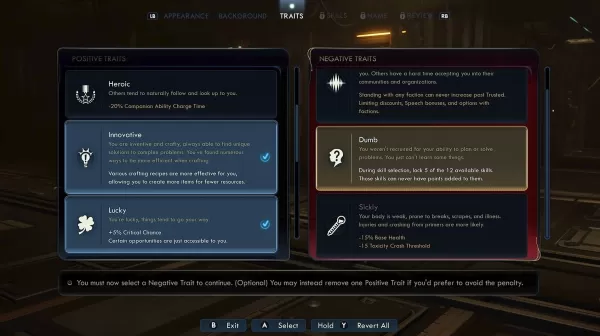
The Outer Worlds 2 Character Creation - Screenshots
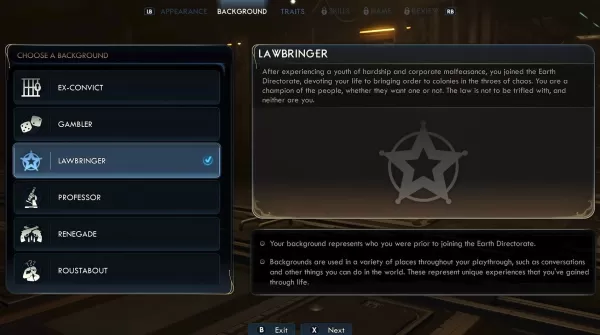
4 Images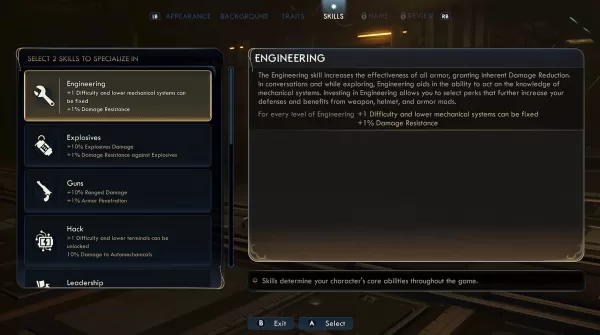
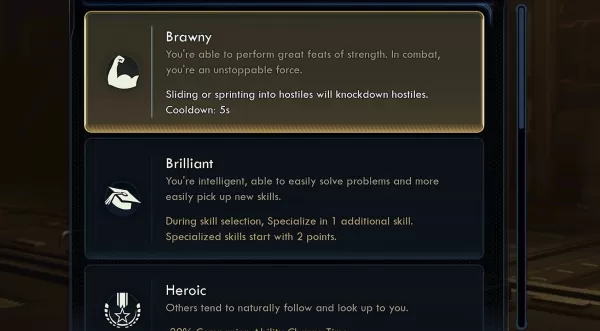
At first glance, this might seem standard for an RPG—if anything, the original Outer Worlds was the anomaly with its grouped Skills. In the sequel, however, the revised Skill system creates stronger distinctions and unlocks more diverse build possibilities, especially when paired with the new Perks.
The Perks of Getting Experimental
Obsidian is emphasizing specificity and unique playstyles. “We’ve expanded the Perks system with over 90 options—each requiring specific Skills to unlock. As you invest in Skills, it opens up different Perk paths,” Koenig explained. He gave an example: the Run and Gun Perk benefits shotgun, SMG, and rifle users by allowing firing while sprinting or sliding. Combined with Tactical Time Dilation (TTD), bullet-time tactics become a core part of your strategy. He also hinted at the Space Ranger Perk, which unlocks special dialogue options and damage bonuses tied to your Speech skill. “When designing Perks, we considered all possible gameplay modes and actions, then explored how to modify them,” he added.
The Outer Worlds 2 wants players to get creative, become more specialized with the things they spec into, and maybe embrace the oddball choices they may have to make.
“We included Perks catering to non-traditional playstyles,” Singh noted, describing a build for players who eliminate every NPC. By choosing Perks like Psychopath and Serial Killer, you can gain permanent health boosts and other advantages. “In an Obsidian game, you can kill anyone—the game adapts, and you can still finish the story. It’s a fun challenge for later playthroughs to see how far you can push it.”
For more conventional approaches, Koenig outlined builds leveraging elemental damage types. “You can mix and match: specialize in plasma to burn enemies while gaining health, use shock to temporarily control automechs, or apply corrosive damage to shred armor and guarantee critical hits.”
Singh emphasized other experimental avenues, mentioning mechanics that reward you for accepting downsides to boost other attributes. He posed the question: “How can you design a build where taking damage becomes a strategic advantage? I enjoy these creative concepts that turn potential weaknesses into strengths.” This philosophy existed in the original but is now central to The Outer Worlds 2, particularly with Traits and Flaws.
The Positive and Negative Traits
“In The Outer Worlds, inspired by Fallout, you could take negative attributes that weakened your character in exchange for extra points elsewhere,” Koenig recalled. The original Flaws system let you accept a permanent debuff based on your actions for an additional Perk point. Based on what I’ve seen, this concept is expanding significantly in the sequel.
The Positive and Negative Traits system embodies this trade-off: choose a negative Trait to gain an extra positive one. For instance, Brilliant grants bonus Skill points during creation, while Brawny lets you knock down targets by sprinting into them. To acquire more positive Traits, you must accept negatives like Dumb, which blocks investment in five Skills, or Sickly, reducing base health and toxicity tolerance. These are just a few examples available in the early build.
The Outer Worlds 2 Gameplay - Screenshots
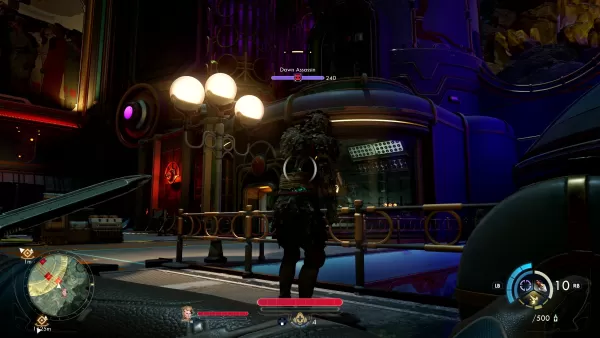
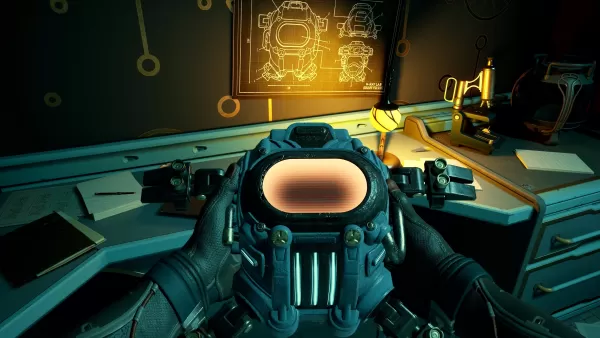
25 Images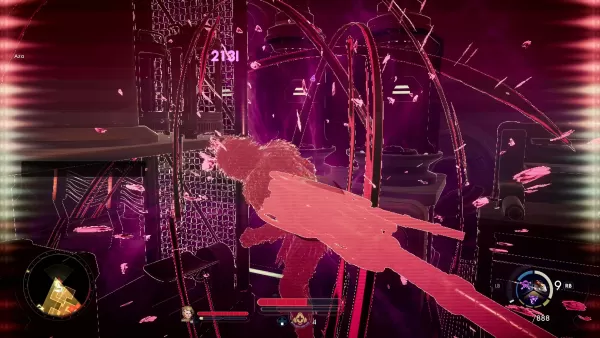
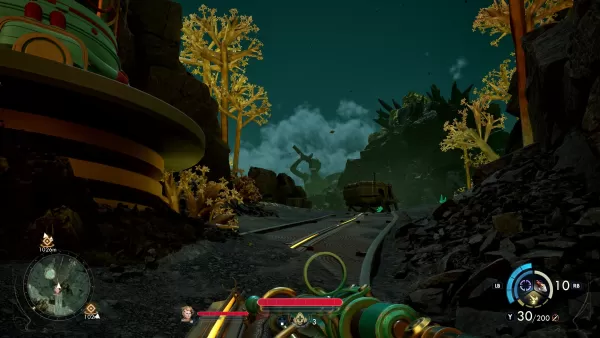
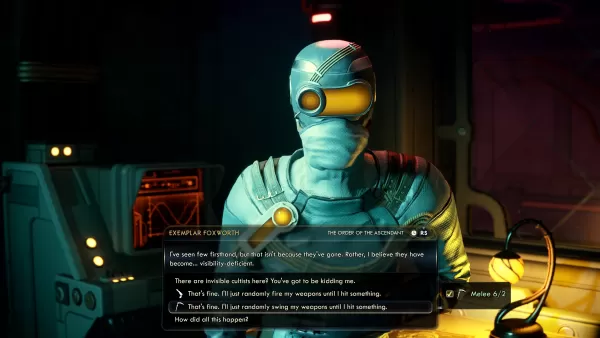
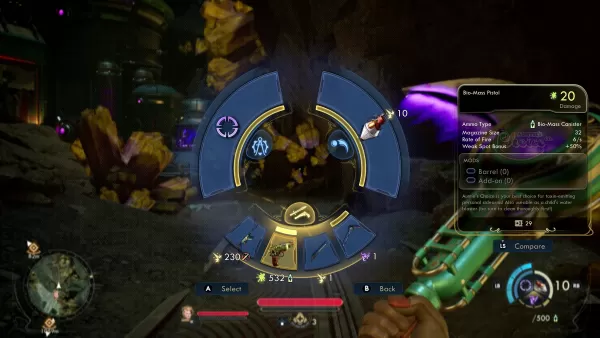
While I’ll explore the updated Flaws in a future article, I can confirm The Outer Worlds 2 introduces more imaginative—and sometimes humorous—mechanics. In the original, I often declined Flaws because the trade-offs rarely felt worthwhile. Now, the game still tracks your behavior, but Flaws include both positive and negative effects, almost like an additional Traits layer that activates based on your choices. You still opt in, but they become a permanent part of your character.
Guiding Players and Ditching Respec
The Outer Worlds 2 introduces many interconnected systems, and Obsidian focused on making them understandable through clear explanations and UI. “From character creation onward, we highlight what each Skill does and how they differ,” Koenig said. This extends beyond tooltips to include short menu videos showing gameplay examples. A standout feature is the ability to bookmark Perks before unlocking them, helping players plan their progression. The menu clearly displays requirements and uses icons to indicate each Perk’s associated playstyle and Skill.
“We're looking for ways to incentivize the player to experiment with different builds, either traditional or non-traditional.”
Obsidian clearly wants players to think carefully about their choices, especially since respec is unavailable after the opening sequence. Once you invest in a Skill, Perk, or Trait, that decision stays with your character for the entire playthrough. Koenig explained, “Removing respec makes your journey unique—a personal experience that respec options often diminish.”
Singh shared the design philosophy: “We believe every choice should matter and meaningfully impact your gameplay.” He concluded, “This approach encourages you to commit to your decisions and discover the interesting outcomes they create.”
Latest News
more >-
-

- Universal Piece Trello and Wiki Links
- Oct 22,2026
-
-

-