CD Projekt Red Enhances Cyberpunk 2077 for Nintendo Switch 2 Launch
- By Lucy
- Oct 10,2025
Nintendo’s April unveiling of the Switch 2 brought surprises, none more striking than Cyberpunk 2077 joining its launch titles. Though the Switch 2 advances Nintendo’s hardware, it remains modest compared to high-end consoles. Cyberpunk 2077, a technically demanding game, includes the Phantom Liberty expansion, originally built for PS5, Xbox Series, and premium PCs. How did CD Projekt Red adapt this ambitious title for Switch 2? Far from cutting corners, the studio achieved a remarkable port without drastic sacrifices.
“We expected a tougher challenge,” says Charles Tremblay, VP of Technology at CD Projekt Red. “But it came together smoothly.”
Development for the Switch 2 version started in summer 2023, when Nintendo approached CD Projekt Red about its then-confidential hardware. “No Software Development Kit existed yet,” Tremblay recalls. “It was more about exploring collaboration potential. We saw the hardware and thought, ‘This looks promising. Let’s dive in.’”
CD Projekt Red previously collaborated with Nintendo on The Witcher 3’s 2019 Switch port, handled by Saber Interactive. For Cyberpunk 2077, secrecy around the unannounced Switch 2 demanded in-house development. “A small, tight-knit team working directly with Nintendo was the best approach,” Tremblay explains.
Keeping development internal leveraged CD Projekt Red’s deep knowledge of Cyberpunk 2077. “Our team knows exactly how to optimize this game,” Tremblay says. The Switch 2 required significant reengineering, as Cyberpunk was built for x86 PC architecture. “The Switch 2’s architecture is entirely different,” he notes. “We rewrote shaders, converted HLSL to GLSL, and adapted the engine extensively.”
The Switch 2’s limited computational cores posed another hurdle, with one core shared with the operating system. “This constrained resources for tasks like decompression,” Tremblay says. “But we were amazed at how quickly the game ran on the platform.”
Early development focused on feasibility. Nvidia’s DLSS technology proved crucial, using AI to upscale resolutions and boost framerates for sharper visuals. “DLSS elevates quality, whether handheld or docked,” Tremblay says. “Our scalable tech also adjusts crowd density and character detail seamlessly.”
Comparisons to the PlayStation 4 have raised concerns, given Cyberpunk’s poor performance on that console. However, the Switch 2’s modern tech, including faster microSD Express storage and more RAM, sets it apart. “Mechanical hard drives were a bottleneck on older consoles,” Tremblay notes. “Switch 2’s storage and memory make a huge difference.”
Cyberpunk 2077 on Switch 2: Performance Breakdown
Balancing performance and visuals is tricky, especially with docked and handheld modes. The Switch 2’s dock provides a slight power boost, enhancing performance mode. On a standard 60Hz TV, the game runs at 30fps. With a 120Hz TV or the Switch 2’s VRR-enabled screen, performance mode targets 40fps.
Docked to TV
Performance Mode: 1080p resolution @ up to 40 frames per second
Quality Mode: 1080p resolution @ 30 frames per second
Handheld
Performance Mode: 720p resolution @ up to 40 frames per second
Quality Mode: 1080p resolution @ 30 frames per second
The Switch 2 doesn’t rival high-end PCs, but it delivers the full Cyberpunk 2077 experience—same missions, characters, and weapons—at adjusted resolutions. Quality mode offers 1080p/30fps, while performance mode targets 40fps at 1080p when docked or 720p handheld.
CD Projekt Red meticulously fine-tuned the game for Switch 2. “Our team scrutinized every detail to balance quality and performance,” Tremblay says. “We iterated constantly, testing compromises to ensure the best experience.”
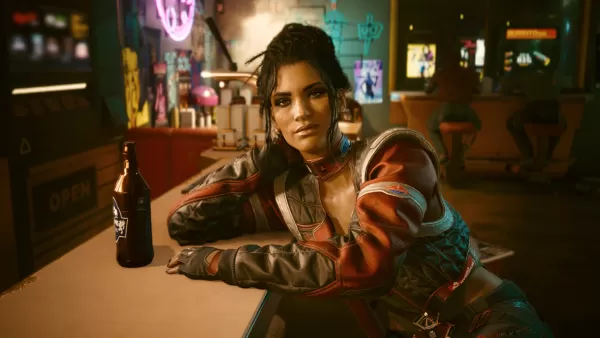
Despite hardware limits, CD Projekt Red maintains strict quality standards, targeting a minimum of 30fps. “Anything below 30fps isn’t acceptable,” Tremblay emphasizes. The 40fps performance mode strikes a balance, especially on 120Hz displays.
The Switch 2 version shines with unique features. “Handheld play, Joy-Con gyros, and mouse-like aiming with the controller create a distinct experience,” Tremblay says. Motion controls enhance shooting, while the right Joy-Con doubles as a precise mouse.
CD Projekt Red embraced Switch 2’s features, integrating motion controls and mouse-like aiming for a unique experience. “These elements set this version apart,” Tremblay says. “It’s not about matching PC’s high-end visuals but delivering a standout portable experience.”
The port prioritizes accessibility over chasing top-tier visuals. For Nintendo fans, it’s a tailored Cyberpunk 2077 experience. Cross-save support adds flexibility, letting players switch between PC and Switch 2 seamlessly. “It’s a game-changer for portable play,” Tremblay concludes.
Latest News
more >-
-

- Universal Piece Trello and Wiki Links
- Oct 22,2026
-

-

-