Astro Bot's Scrapped Features: Bird Flight Level and Headless Bot Uncovered
- By Alexander
- Oct 08,2025
Astro Bot enthusiasts may know about the sponge power-up's origin, but were you aware that Team Asobi also tested quirky features like a coffee grinder and a roulette wheel?
This came to light when IGN attended GDC 2025, where Team Asobi's studio director Nicolas Doucet delivered a presentation titled, "The Making of 'ASTRO BOT'". During his talk, Doucet dove deep into the creation of the PlayStation mascot platformer, revealing early prototype images and discarded content.
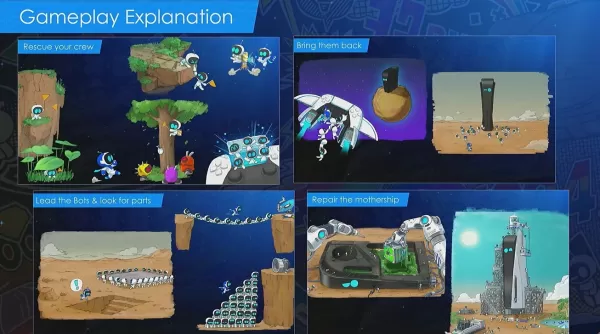
Doucet kicked off by discussing the initial pitch for Astro Bot, drafted in May 2021, shortly after Team Asobi started prototyping. He noted that the pitch went through 23 revisions before reaching top management. Presented as a charming comic strip, it outlined the game’s core elements and activities, clearly winning approval.
Doucet then shared how the team brainstormed ideas. The process involved forming small, cross-disciplinary groups of 5-6 people who jotted down or sketched concepts on sticky notes, resulting in a vibrant brainstorming board:
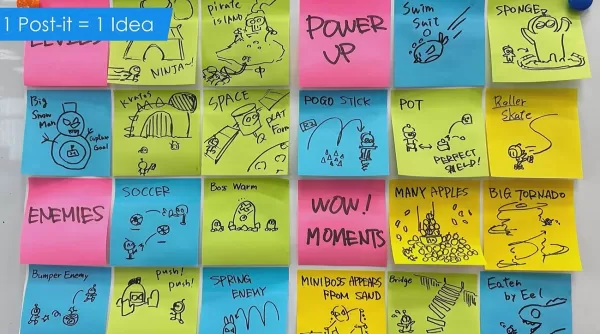
Not every idea advanced to prototyping, Doucet explained. Only about 10% of brainstormed concepts were developed. Still, prototyping was extensive. Doucet emphasized its value, noting that all team members, including non-designers, were encouraged to test ideas. For example, audio designers built a theater within Astro Bot to experiment with haptic controller vibrations tied to sound effects, like varying door movements.
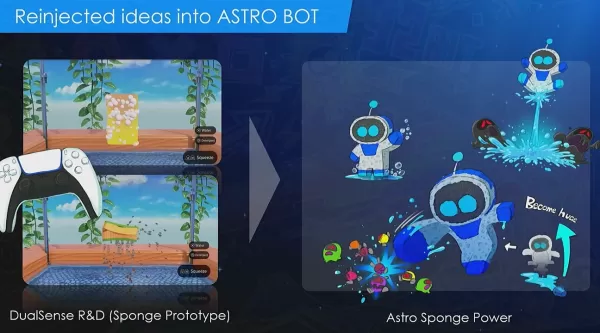
Prototyping was critical for Team Asobi, Doucet said, with some programmers dedicated to exploring non-platforming ideas. The sponge mechanic, for instance, stemmed from a prototype using adaptive triggers to simulate squeezing a sponge dry, which proved fun and made it into the game.
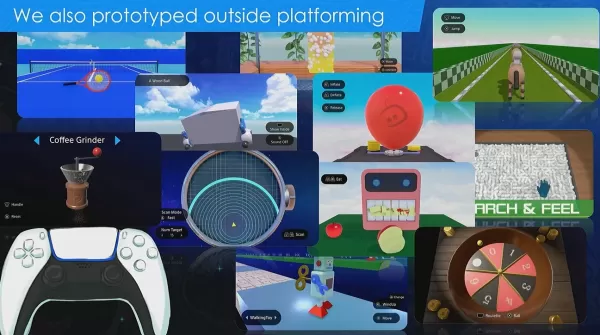
Doucet presented an image featuring prototypes, some of which became game mechanics like the balloon and sponge, while others, like a tennis game, a wind-up toy, a roulette wheel, and a coffee grinder, were left out.
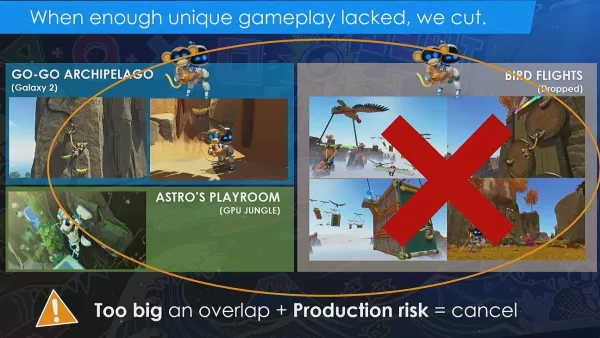
Later, Doucet discussed level design, emphasizing that each level needed unique gameplay to avoid repetition. While power-ups could be reused, their implementation had to feel distinct. He shared images of a scrapped bird flight-themed level, cut because its use of the monkey power-up was too similar to the Go-Go Archipelago level and another in Astro’s Playroom.
"Ultimately, we decided the overlap didn’t foster enough variety, so we removed the level entirely," he said. "We’ll never know if it would’ve been a hit, but I believe redirecting that effort was the right call."
Doucet wrapped up by discussing the game’s final scene. Spoiler alert: proceed with caution if you haven’t completed Astro Bot.
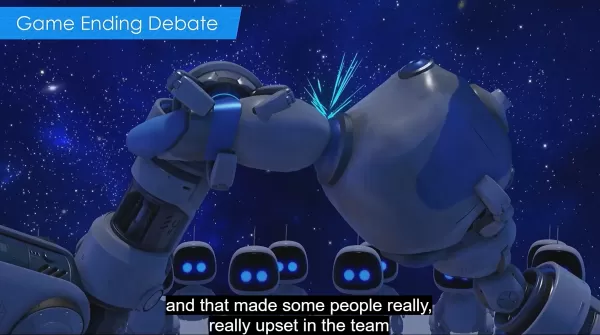
In the final scene, players rebuild a broken Astro Bot with help from other bots. Initially, the design had players facing a fully dismembered Astro—just a torso, no head or limbs. Doucet noted this upset some people, leading to the less drastic version in the final game.
Doucet’s talk offered additional insights into Astro Bot’s development. IGN has previously spoken with him about the game, which we rated 9/10, praising it as "a brilliantly creative platformer, especially meaningful for PlayStation fans."
Latest News
more >-
-
- Universal Piece Trello and Wiki Links
- Oct 22,2026
-
-
-