Walking Dead Game Launches in Fortnite
- By Emery
- Dec 29,2025
With layoffs, studio closures, and funding shortages, it’s clear the games industry has faced significant challenges. Enrique Fuentes, CEO and co-founder of Teravision Games, experienced this turbulence firsthand with the release of Killer Klowns From Outer Space, an asymmetrical horror game inspired by the 1980s cult film. The game earned positive reviews—IGN awarded it a 7, describing it as “just as silly and entertaining as the movie it’s based on.” Trailers also attracted hundreds of thousands of views online. Yet, despite its reception, Teravision found themselves confronting the same industry-wide struggles after launch.
“As you know, 2024 was a tough year across the industry, so securing our next project took longer than expected,” Fuentes explains. Despite past collaborations with major names like Disney, Nickelodeon, and Xbox, Teravision struggled to find a follow-up to Killer Klowns. With time running short, the veteran team—boasting 20 years of industry experience—turned to an unconventional path: developing games inside Fortnite. In under a year, they released three titles using Unreal Engine for Fortnite (UEFN). Their fourth, launching today, incorporates the official The Walking Dead content pack available in UEFN.
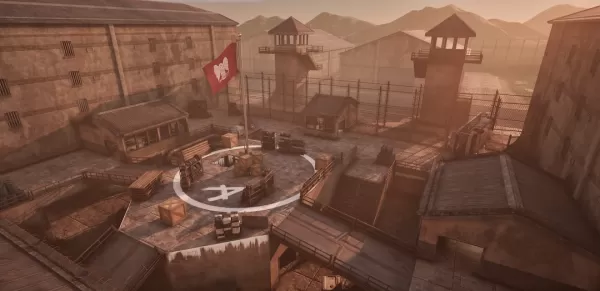
Developed in collaboration with Skybound—the company co-founded by The Walking Dead creator Robert Kirkman—Teravision’s latest UEFN release is a King of the Hill-style multiplayer PvPvE experience called Courtyard King. Set in the series’ iconic prison location, players battle each other and NPC zombies to control territory.
All The Walking Dead-related assets in Courtyard King use officially released UEFN content, including character models of Rick Grimes, Negan, and Daryl Dixon. Yet the partnership went deeper: Teravision collaborated with Skybound's writers to craft the game’s narrative and dialogue.
“Instead of multi-year projects like Killer Klowns, we can now complete titles in just weeks or months.”
“We’ve worked with major brands before and were already experimenting with UEFN, but we never imagined it would lead us to collaborate with a company like Skybound,” says Fuentes. “But user-generated content is currently one of the most exciting areas in gaming.”
User-generated content (UGC) is driving a powerful trend in gaming, particularly on platforms like Fortnite. While platforms such as Roblox have popularized this sandbox-style development, the ‘U’ in UGC often refers to enthusiasts and hobbyists. Increasingly, however, professional studios are also adopting the model—and for experienced developers like Teravision, Fortnite’s Unreal Engine 5-based tools offered the perfect entry point.
“It made sense for our engineering background, offering a platform where we could experiment and manage risk,” Fuentes explains. “Compared to multi-year projects like Killer Klowns, these are games we can produce in weeks or months.”
Their experimentation led to Havoc Hotel, a roguelike shooter challenging players to fight their way up a hotel, earning currency on each cleared floor to buy better weapons. The first Havoc Hotel was a modest success, encouraging the team to continue the series. Havoc Hotel 3 has since become one of Fortnite’s most consistently popular experiences.
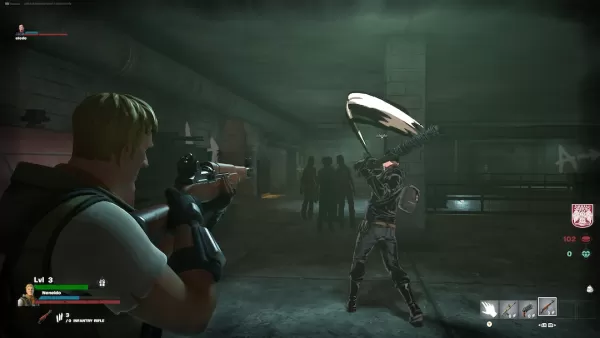
Martin Rodriguez, Teravision’s game designer, notes that having previously developed Killer Klowns in Unreal Engine, transitioning to UEFN—a customized version of Unreal Engine 5—was not only convenient but gave the team an edge. “UEFN streamlines many systems and offers a more ‘drag-and-drop’ workflow,” Rodriguez says. “It eliminates some of the groundwork, allowing us to focus on creativity and improving the games themselves.”
“These situations don’t always form clear competitive scenarios, yet they still function effectively.”
While the engineering team adapted smoothly to UEFN’s Unreal-based framework, the design team encountered unique challenges. Projects like Havoc Hotel began as experiments rather than fully planned games, evolving organically into their own distinct experiences. LD Zambrano, Teravision’s creative director, quickly realized UEFN games differ from traditional titles in several ways.
“In traditional game design, players engage through structured objectives encouraging cooperation or competition,” Zambrano says. “In UEFN, those goals remain relevant, but we’ve noticed many popular Fortnite experiences thrive as open-ended ‘contexts.’ They create unusual interactions that may not fit into a clear competitive framework, yet they still captivate players.”
Zambrano compares UEFN games to the school playground: “It reminds me of recess—you meet someone, invent a game that might not make complete sense, but you still connect and build friendships. That's what I mean by these experiences becoming a ‘context.’”
This philosophy led to an interesting feature in Courtyard King: it's an infinite game. There is no final winner at the end of a round. Matches continue indefinitely, with players joining or leaving and even switching teams mid-game. Though one team may lead at any time, no match ever officially concludes with a single victor.
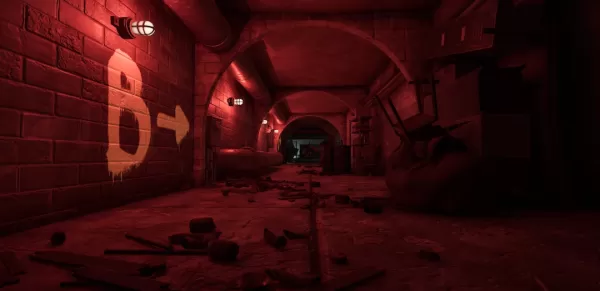
“Players can drop in or out at any moment, and they’re free to change teams—which naturally leads to betrayals. Imagine entering a match with a friend, then secretly switching sides without telling them. It’s very much in the spirit of The Walking Dead.”
“Now, this is a viable model capable of supporting an 80-person studio like ours, all while we manage the risks involved.”
Could this be the future for game developers? On one hand, studios operate within the ecosystems of giants like Epic Games and Roblox. But for teams aiming to innovate without exhausting their budgets—while tapping into a huge audience and well-known IP like The Walking Dead—Enrique Fuentes sees considerable potential.
“As an indie developer, we can embrace risks within UEFN. Last year, the thought of starting a three-year project was out of reach. Now, we can develop something in weeks with a compact team, shifting the entire paradigm for new studios. This model allows us to sustain an 80-person team and take on manageable risks,” Fuentes states. “If you have the right ideas, creative vision, and a solid understanding of the market, execution is no longer a multi-year endeavor—it can happen in weeks or months. For indie developers, that’s a dream come true.”
Latest News
more >-
-

- Universal Piece Trello and Wiki Links
- Oct 22,2026
-
-

-